|
|
|
|
Sports - PreventionThe Center for Disease Control and Prevention has produced a number of documents and kits about brain injury and prevention. http://www.cdc.gov/concussion/ Heads Up to Clinicians: Concussion Training by CDC & NFL http://preventingconcussions.org/ Head Injury Prevention - A rundown on risks and prevention of head injury in youth sports. http://www.publichealthdegree.com/resources/head-injury-prevention-in-youth-sports-an-online-guide/ Is a Helmet Worth It? How Brain Injuries Affect Different Body FunctionsIf you ride bicycles or motorcycles, you may have an idea of just how much crashing hurts. Crashing or being hit while riding your bicycle can be anything from simply embarrassing to majorly painful. New riders may think that they’re skilled enough to never crash, but there are many factors outside of their control, and the occasional crash is inevitable. But while some crashes leave the rider with a few bruises and scrapes, some leave them with broken bones and other painful injuries. This is why bike safety is so important. There are so many ways that bike injuries can linger or lead to lifelong issues that to ride without the proper safety gear is very unwise. This is especially true for those who live in a large city like New York City. Because NYC has such a large population, there are many more people and vehicles on the streets. It’s much more likely someone will run into you or get in your way and cause a crash. While broken bones will hurt and take time to heal, a head injury can be even worse. Damage to the brain can be irreversible and make it difficult to function. It can lead to vision and hearing loss, difficulty with memory, a lack of coordination, and can even affect your heart rate and ability to breathe. Because each section of the brain controls different parts of the body, a brain injury can affect just about anything. 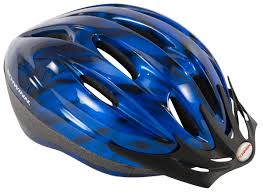 Bicycle Injuries: Would they have been prevented with a helmet? According to the Insurance Institute for Highway Safety, in 2009, 91% of all bicyclists killed in an accident were not wearing a helmet. That means out of the 628 riders who were killed that year, 573 of them weren’t wearing a helmet. This wasn’t an abnormal year, either—the percentage of bikers who died in accidents and were not wearing a helmet has never been below 80% with the exception of the 2010-2012 statistics. These statistics are actually the abnormality because, while 65 to 70% were not wearing helmets, another 16 to 17% are listed as “unknown,” meaning they may or may not have had some kind of protective headgear on at the time of the accident. The most commonly injured bicyclist is a male over 16 years old riding without a helmet in an urban area. Out of the 601 bikers who were killed in 2012, only 166 of them had a blood alcohol content level above .08 percent. Most were completely sober. What can be drawn from these statistics? While it’s hard to say if any of the bicyclists would have survived their crash if they had been wearing a helmet (helmets cannot prevent neck or face injuries), it’s entirely possible some of them would have.
In many non-fatal crashes, there is a definite answer: helmets reduce damage to the brain. According to a number of studies, head injuries account for over 60 percent of all bicycle-related injuries. In a study done by the Bicycle Helmet Safety Institute, medical professionals reported that up to 88 percent of these head injuries that resulted in brain trauma could have been prevented had the bicyclist been wearing a helmet.
Keep a
Lid On It: Wear a Helmet – How to choose or replace a helmet.
Cheap or Expensive Bicycle Helmets – How much of a difference is there? Bicyclist Fatality Facts – Statistics gathered by the Insurance Institute for Highway Safety Precious Protection – The evolution of helmets over the years and what designers have learned. Safety Helmets Save Lives, Prevent Traumatic Brain Injury – How helmets protect children.
Brain Areas and Associated Functions Damage to the brain can lead to many different difficulties and lifelong issues. The brain controls everything about the human body. As such, damage to the brain can affect any part of the body, even changing a person’s behavior and abilities. The brain can be divided into six different areas. The brain stem is the term for the lowest part of the brain that connects to the rest of the body. Because it connects to the neck, the brain stem is fairly vulnerable. Damage to the brain stem can lead to many different physical problems, including a loss of balance and the ability to sleep. It can also cause an irregular heartbeat, breathing problems, and difficulty with swallowing. The brain stem controls blood pressure, body temperature, sweating, and digestion, too, and any or all of these functions can be affected by damage. The cerebellum is the part of the brain that coordinates movement, balance, equilibrium, and helps with reflexes. Those who have damage to their cerebellum may have difficulty performing complex actions or, in the case of major damage, basic actions like walking. The frontal lobe is where much of our thinking occurs. It controls things like how we perceive our environment, our emotions, our language, and how we understand concepts and solve problems. A head injury that affects the frontal lobe can make it very difficult to function. The parietal lobe handles many of our senses, including touch perception and our ability to manipulate objects. Damage here can throw off how the senses work together. The occipital lobes are concerned with one function: vision. Damage to these lobes can lead to a loss of vision and blurred vision. Finally, the temporal lobes handle hearing, memory, emotion, and the processing of verbal information. Light damage can cause a decrease in hearing or in memory, while major damage can leave someone unable to express emotion or remember much of anything.
Understanding Brain Injury
– What you should know about brain injury recovery.
How Your Brain Works – An informative slideshow from the Mayo Clinic. Brain Basics: Know Your Brain – A look at how the brain functions. Living with Brain Injury – The difficulties a brain injury can cause and how one can adapt. Traumatic Brain Injury – What can happen when the brain is injured.
Parts of The Brain and Their Functions – How will brain damage affect your functionality? The Four Lobes – What they are and what they do. Brain Structures and their Functions - An online resource on the brain. Damage to the Frontal Lobes – How an injury to the frontal lobe affects a person. Parts of the Brain and Their Functions – Details the different sections of the brain. Conclusion Don’t open yourself up to brain damage from a bicycle injury. Purchase and wear a helmet whenever you ride. - reference: http://www.dandalaw.com/resources/is-a-helmet-worth-it/
Head Injuries Sustained during Sports and Recreation pdf: Hbn2-2.pdf
Sports and Recreation Sports are a valued pastime, but playing them safely is part of the game. Scope
Boxing
Soccer
Football
Sources: This fact sheet was developed by the Brain Injury Association of America (April 2001)
|
| Additional Statistics and Information
Most Hazardous Sports - Forbes.com But given the statistics on sports-related injuries sending Americans to emergency rooms each year, experts say it's a topic that deserves more attention. ... www.forbes.com/2008/05/29/health-hazardous-sports-forbeslife-cx_avd_0529health.html Sports Injury Statistics Detailed information on sports injuries in children. www.healthsystem.virginia.edu/UVAHealth/peds_orthopaedics/stats.cfm NCHS - NAMCS / NHAMCS Sports Injury Table National Center for Health Statistics 3311 Toledo Road Hyattsville, Maryland 20782 ... Emergency visits for sports-related injuries. Ann Emerg Med. ... www.cdc.gov/nchs/about/major/ahcd/injurytable.htm Sports Injury Statistics Other national surveys have highlighted the problem of sports injuries among children and adolescents. During the years 1997-1998, an estimated 2.6 million ... www.iprc.unc.edu/pages/stats/sports.html Sports Injury Statistics - Lucile Packard Children's Hospital In the United States, about 30 million children and teens participate in some form of organized sports, and more than 3.5 million injuries each year, ... www.lpch.org/DiseaseHealthInfo/HealthLibrary/orthopaedics/stats.html Sports Injury Statistics - My Child Has - Children's Hospital Boston Flower Sports Injury Statistics ... Although death from a sports injury is rare, the leading cause of death from a sports-related injury is a brain injury. ... www.childrenshospital.org/az/Site1112/mainpageS1112P0.html sports related injuries Common sport injuries - prevention, statistics, stretching exercises and ... common sport injuries, sport related injuries, sport injury statistics, ... www.sportsinjurybulletin.com/archive/0123a-sport-injuries.htm Sports injury rates: U.S. statistics on all sports injuries. As the definitive U.S. study on the subject, the Comprehensive Study of Sports Injuries in the U.S. reveals injury statistics and sports injury rates as ... www.americansportsdata.com/sports-injury-rates-statistics.asp Sports injury experiences from the Western Australian sports ... injury statistics for. professional sport may not necessarily be translatable to community-level sports. ... www.blackwell-synergy.com/doi/pdf/10.1111/j.1467-842X.2002.tb00348.x Sports Injury Statistics National Injury Information Clearinghouse. Estimates for Sports Injuries 1998 (1998 Statistics should be released from the CPSC in July of 2000) ... www.nyssf.org/statistics1998.html |
|
HOME Board and Staff BIAOR Store Interested in Becoming Board Member? About BIAOR Press Room Professional Members Advertising Sponsoring Volunteering Opportunities What Can BIAOR Do For Me? |
RESOURCES Publications to Download Headliner Newsletter Family & Survivor Links Medical & Professional Links Resources - State & National Resources on the Web Who to Contact for Help/Services Survivors Corner What is TBI? Videos Brainline.org Stroke Resources Resources in Spanish |
SUPPORT GROUPS FIND AN EXPERT PREVENTION Children Seniors Sports Concussion Tool Kit Second Concussion CONFERENCES & EVENTS Legislative Advocacy Annual Conferences Fundraisers Events |
TRAININGS & WORKSHOPS WA Legal Conference CBIS Training Training VETERANS Military Resources Oregon VA TBI & Vets Veterans & Suicide -HOTLINE INFORMATION Veterans & PTSD Stories & Media Articles Oregon Vet Centers |
INFO/CONTACT Contact Us Membership Information See all the ways to give | ||||
| Copyright © 1997-2019 BIAOR. | Contact Us
|
Brain Injury Links, Products and Information are for your convenience. The material on this website is provided for education and information purposes only. The Brain Injury Alliance of Oregon does not support, endorse or recommend any method, treatment, facility, product or firm mentioned on the website. The Brain Injury Alliance of Oregon does not control third party websites and are not responsible for their contents. The Brain Injury Alliance of Oregon does not endorse, recommend, or approve any third party website hyperlinked from this Website and shall have no liability to any entity for the content or use of the content available through such hyperlink. Always seek medical, legal or other professional advice as appropriate. |
||||||||


