|
|
|
|
Seniors-preventionFalls: 2002.Fact.Sheet.falls.pdf
Falls and Traumatic Brain Injury: The Elderly at Risk Although your parents and grandparents may be physically fit, many elderly people suffer severe injuries when they fall. Statistics also show that when older people fall, they are more likely to be hospitalized for traumatic brain injuries. The Centers for Disease Control published their findings regarding falls and traumatic brain injury in the April 4, 2003, issue of Morbidity and Mortality Weekly Report. These statistics included 29,761 traumatic brain injuries (TBIs) that required people to be hospitalized between 1996 and 1999 in California. Of these cases, 1,752 people died. Most (71%) of the people who died were over 65 years old.
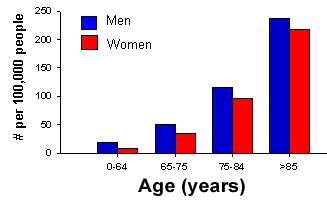
Hospitalizations for
nonfatal fall-related TBIs
Notice: 1) The rate at
which people were hospitalized for fall-related TBIs increases with
age. Why do older people have to go to the hospital more often than younger people? Some elderly people suffer from diseases such as Parkinson's disease and osteoarthritis that make them more likely to fall. Many older people take medications that may make them dizzy or drowsy and some may have impaired balance and weaker muscles. These factors may all contribute to more frequent and serious falls. TBIs are not the only problem the elderly face when they fall. Broken bones, especially hips, are a frequent consequence of falls. The fear of falling may make the elderly less active. This may cause them to exercise less and cause further weakness. Dr. Mary E. Tinetti, a physician in the Department of Internal Medicine at Yale University School of Medicine, suggests several ways to prevent falls in elderly people:
References:
Source: http://faculty.washington.edu/chudler/efall.html;
April 8, 2003 There are physical changes in older individuals that make their brains more vulnerable to injury and reduce their chances to recover (Patrick, 1996). Generally speaking, older individuals have longer hospital stays, take longer to recuperate, need more time and effort to reach the same level of recovery that younger individuals attain and often have a less positive prognosis, recovery and outcome (Pilisuk & Feinberg, 1996). Studies have shown that the incidence of brain injury goes up sharply after age 70 (Pilisuk & Feinberg, 1996). FallsPeople over the age of 65 have a very high rate of injury due to falls. In fact, falls are the leading cause of brain injury in the elderly. There are several factors that contribute to the great danger of falls to older individuals, including: s Some elderly people take medications that may affect perception and/or balance, therefore increasing the risk of falling (Patrick, 1996) s Many individuals over the age of 65 also may have other medical conditions, apart from a brain injury, that make falls likely (i.e., visual limitations, orthopedic problems) s External factors associated with falls among the elderly include a history of one or more prior falls, lack of exercise, improper footwear and hazards in the home Preventing FallsEven older people (ages 65 and up) should exercise regularly, as daily physical activity will increase a person’s strength and sense of well-being. There are many exercises that improve balance, and health care providers can guide individuals to the exercise program that is best for them. Another important preventative measure is home safety checks. During these checks, items that may pose potential trip hazards like magazines and shoes should be removed from stairs and all walking areas. Frequently used items should be stored in easy-to-reach places where using a step stool or chair is not necessary. Improved lighting in the house can help elderly people see better and reduce falling. Handrails and lights should be installed on all stairs and outside areas, as well as bathrooms. Motor Vehicles and Older DriversAccording to the National Highway Traffic Safety Administration (NHTSA), today’s senior citizens are mobilityminded and electing to drive longer (1999a). Some older drivers, however, are unable or unwilling to correctly assess their driving capabilities to continue operating a motor vehicle safely. Changes in visual acuity, ability to focus on daily occurrences, reaction time, coordination under stress and ability to effectively react to stress-related situations are common factors in the aging process. The changes in driving habits that occur as a result of aging can be directly attributed to physical changes. Preventing Motor Vehicle InjuryElderly individuals that have difficulty driving can be referred to a local assistance agency that can coach and counsel them on safe driving habits. Elderly individuals should be encouraged to reduce the amount that they drive and the conditions they drive in (i.e. nighttime, inclement weather, interstate driving). PedestrianAccording to NHTSA (1996), older pedestrians (age 70 and older) had the highest pedestrian fatalities in 1995, accounting for approximately 18%. The pedestrian fatality rate among this group was higher than that of any other, with the second highest pedestrian fatality rate coming from the next older group of 55-to 64-year-old individuals (NHTSA, 1996). Factors contributing to these pedestrian casualties include: 1) a lack of pedestrian safety practices, 2) improper pedestrian behaviors, 3) the physical impairments of many elderly walkers and 4) alcohol involvement of driver and/or pedestrian (NHTSA, 1996). Preventing Pedestrian InjuryTo prevent pedestrian injury and death, people should remember to: · Use sidewalks. If no sidewalk is available, walk in the street facing traffic · Cross only at intersections and crosswalks. Never cross the street between parked cars · Look left, right and left again for traffic before stepping off of the curb · Walk where you are visible to drivers · When walking after dark, always wear reflective clothing Suicide and the Elderly Although authorities agree that many suicides are not reported, the National Center for Health Statistics records that between 25,000 and 30,000 self-inflicted deaths occur in the United States each year (NCADI, 1999). For every death from suicide, it is estimated that eight other attempts were made (NCADI, 1999). Suicide among the elderly (65 years of age and older) is becoming an increasing problem and high rates of alcohol involvement have been found among individuals who commit suicide by using firearms. Although the reasons for firearm death vary by age, 98% of people ages 65 and older that die by firearms have committed suicide. Preventing SuicideThe diagnosis and treatment of suicide requires trained professionals. The information provided is to be used for educational purposes only. It should not be used as a substitute for seeking professional care for the individual who has talked about suicide. If you feel that someone is suicidal, do not be afraid to ask - a suicidal person needs to see a doctor or psychiatrist immediately. Follow through when getting a person help by being available for doctor’s appointments, explaining medications and support in general. Remove any weapons from the home. Outcome after Elderly Brain InjuryMost of the knowledge about outcome in older individuals with brain injury comes from studies involving age groups (Englander & Cifu, 1999). These studies have documented the effect that increasing age has on poorer outcomes and increasing deaths. The majority of these studies show a poorer prognosis for the older than the younger adult, with a correlation noted as young as 40 years (Englander & Cifu, 1999). The National Institute on Disability and Rehabilitation Research (NIDRR) supports these findings in their TBI Model Systems Data Set, which revealed that individuals aged 55 and older: · Had significantly longer, more costly stays on rehabilitation units · Recovered approximately half as quickly · Had greater cognitive impairment at discharge than a group of individuals 55 and under who were matched for similar injury and severity (Cifu et al., 1996) Older individuals in good health tend to have better outcomes than ones who are in poorer health, have medical conditions or problems associated with aging. The severity of the injury and the time it takes to receive the proper medical attention all will affect the outcome of these older people. As always, the only cure for brain injury is prevention. ReferencesCifu et al.: Functional outcomes of older adults with TBI: A prospective, multicenter analysis. Arch Phys Med Rehabil. 77:5888, 1996. Englander J & Cifu DX: The older adult with traumatic brain injury. In: Rehabilitation of the Adult and Child with traumatic brain injury. Philadelphia: FA Davis, 1999. Pgs. 453-471. National Center for Alcohol and Drug Information: Alcohol and Other Drugs & Suicide. 1999.National Center for Health Statistics. 1999. National Highway Traffic Safety Administration (NHTSA).1996 National Highway Traffic Safety Administration (NHTSA). 1999a. Youth Facts: Fatal Crash and Alcohol Facts. Patrick, P.: A new frontier: Exploring Brain Injury and aging. TBI Challenge!. 4(3):4-6, 1996. Pilisuk T & Feinberg LF: Defining roles for caregivers and families. TBI Challenge!. 4(3):8-10, 1996.Source: This article is an excerpt from: Brain Injury: The Golden Years --- Understanding and Preventing Adult Brain Injury. Brain Injury Association of America www.biausa.org 1.800.444.6443 |
|
|
HOME Board and Staff BIAOR Store Interested in Becoming Board Member? About BIAOR Press Room Professional Members Advertising Sponsoring Volunteering Opportunities What Can BIAOR Do For Me? |
RESOURCES Publications to Download Headliner Newsletter Family & Survivor Links Medical & Professional Links Resources - State & National Resources on the Web Who to Contact for Help/Services Survivors Corner What is TBI? Videos Brainline.org Stroke Resources Resources in Spanish |
SUPPORT GROUPS FIND AN EXPERT PREVENTION Children Seniors Sports Concussion Tool Kit Second Concussion CONFERENCES & EVENTS Legislative Advocacy Annual Conferences Fundraisers Events |
TRAININGS & WORKSHOPS WA Legal Conference CBIS Training Training VETERANS Military Resources Oregon VA TBI & Vets Veterans & Suicide -HOTLINE INFORMATION Veterans & PTSD Stories & Media Articles Oregon Vet Centers |
INFO/CONTACT Contact Us Membership Information See all the ways to give | ||||
| Copyright © 1997-2019 BIAOR. | Contact Us
|
Brain Injury Links, Products and Information are for your convenience. The material on this website is provided for education and information purposes only. The Brain Injury Alliance of Oregon does not support, endorse or recommend any method, treatment, facility, product or firm mentioned on the website. The Brain Injury Alliance of Oregon does not control third party websites and are not responsible for their contents. The Brain Injury Alliance of Oregon does not endorse, recommend, or approve any third party website hyperlinked from this Website and shall have no liability to any entity for the content or use of the content available through such hyperlink. Always seek medical, legal or other professional advice as appropriate. |
||||||||