ORGANIZATION
About BIAOR Mission
Vision
Guiding Principles
Background
History
BIAOR Non-Discrimination Policy
About BIAOR
The Brain Injury Alliance of Oregon, Inc. is
the only statewide
501(c)(3), not-for-profit association dedicated to creating a better future through brain injury prevention, resource facilitation (Information &Referral;), education, advocacy, and statewide support groups and peer mentoring.
Founded in 1984, many of its founders have had their own lives altered by brain injuries sustained by themselves, a family member, or friend. The Brain Injury Alliance of Oregon today is a leader in brain injury support, education, prevention and advocacy. BIAOR’s leadership represents a cross section of stakeholders in the field of brain injury, including survivors, family members, medical and clinical
practitioners, attorneys, researchers and service providers. Since its inception, BIAOR has worked tirelessly to raise public awareness, prevent brain injury by education, improve treatments through professional education and research, and advocate for progressive change in the law.
BIAOR provides:
- Information and Referral:
BIAOR serves as a
clearinghouse for community resources
through our 1-800-544-5243 toll free Neuro
Resource Facilitation
helpline, receiving over 7200 calls and 3200 emails a year,
referring survivors, family and
professionals alike to community, state and
national services, resources, and
professionals serving the brain injury
community, sending over 1520 information packets free
of charge annually. Each packet includes
DVD's and written material customized to
each recipient. More than 2500 DVD's are
sent each year.
- Peer mentoring and support
for family
members and survivors;
- Support Groups: over
65 support groups throughout the state;
- Advocacy: working to educate legislators and voters on
brain injury issues and assisting survivors
and families to the get to the services they
need; Passed legislative bills include:
2007 - March as Brain Injury Awareness Month in Oregon;
2009 - SB 348 Max's Law, sports concussion
legislation for state school coaches; and
SB 381- TBI Health Care Mandate stating that all health care plans serving members in the state of Oregon must provide coverage of medically necessary therapy and services for the treatment of traumatic brain injury.
2013: SB 721 Jenna's
Law-sports concussion legislation
for all non-profit sport teams the state
- Awareness and Prevention
activities: Bike Rodeos; up to 1000
bike and skateboard helmet give-aways
annually; over 300 annual community presentations in settings that range from schools to professional meetings to state prisons
to assisted living, Coach training to prevent concussions; Brain Injury Simulation trainings
to the Oregon Legislature, to businesses, the Oregon Judicial Departments, Police Departments; fundraisers throughout the year;
- Support Services: dispersing donated computers, volunteering opportunities and work trials for survivors in rehabilitation, in the office and in the community, training in the office to improve office skills;
- Research: working to facilitate research in the field of brain injury by disseminating current calls for input and volunteers on TBI issues;
-
Education:
through more than 350
conferences, workshops,
trainings, seminar's and presentations and our quarterly newsletter,
The Headliner, reaching more than 16,000 members and supporters
quarterly,
and the BIAOR website with more than 100,000
unique visitors a month-more than 1,200,000
annually.
BIAOR non-discrimination policy:
The corporation's programs serve persons of any
sex, race, color, national and ethnic origin and all
persons are entitled to the same rights, privileges,
programs, and activities generally accorded or made
available to persons served by the corporation's
programs. The corporation does not discriminate on
the basis of sex, race, color, national and ethnic
origin in administration of its policies or
programs.
Contact Information:
Oregon Brain Injury Information
Center
Toll Free 800-544-5243
Click here to send general email inquiries
Brain
Injury Alliance of Oregon
Mailing Address: PO
Box 549, Molalla OR 97038-0549
Join the Brain Injury Alliance of Oregon!
Join BIAOR and work toward a richer, brighter future for all
survivors! Click
HERE for more information.
RENEW YOUR 2013-14 MEMBERSHIP:
Online: CLICK HERE
By Mail: Click Here
Join the Brain Injury Alliance of Oregon!
Join BIAOR and work toward a richer, brighter future for all
survivors! Click
HERE for more information.
Mission:
Creating a better future through brain injury
prevention, research, education, and advocacy.
Vision:
A world where all preventable brain injuries are
prevented, all unpreventable brain injuries are
minimized and all individuals who have
experienced brain injury maximize their quality
of life.
Guiding Principles
Adopted at the Brain Injury Association of
Oregon's Board of Directors Meeting on January
18, 2007.
1.
Value and respect the dignity and worth of all
people in a true spirit of inclusion.
2. Support individual choices.
3. People with brain injury should have
opportunities to be full participating members
of their community.
4.
Recognize and support the needs of individual's
families and their circle(s) of support.
5. Provide rapid, relevant and accessible
information.
6. Promote excellence, quality and best practices
in all fields.
7.
Support prevention opportunities through
research, education and public awareness.
8. Address complex and controversial thorny issues.
9. Promote progressive public policy.
10. Respond to issues with integrity and courage.
Background
Everyone – whether he/she is
aware of it or not – knows someone who has
experienced some form of brain injury The Centers for Disease Control and
Prevention (CDC)
estimates
that 5.3 million American children and adults – 2%
of the population currently live with
disabilities resulting from traumatic brain injuries
(TBIs). The Brain Injury
Association of Oregon is the only state
nonprofit that specifically addresses issues faced
by 81,423 Oregon children and adults who live
with a long-term disability as a result of traumatic
brain injury.
Every twenty-two seconds someone in this
country sustains a traumatic brain injury.
Each year, one million people are treated and
released in hospital emergency rooms for brain
injury.
These statistics do not include the incidences of
mild TBI, such as concussion, which might well add
another one million individuals to this figure.
According to the Center for Disease Control,
6.2 times more people are diagnosed with traumatic
brain injury in the United States
every year than are diagnosed with HIV-AIDS, breast
cancer, spinal chord injury and multiple sclerosis
combined and is estimated to cost the U.S. $60
billion a year.
The number of Americans living with brain
injury is over 13 times the number living with AIDS;
six times the number with HIV/AIDS; nearly twice the
number with breast cancer; and nearly 1.5 times the
number with Mental Retardation and Developmental
Disabilities combined.
The statistics involving brain
injury are increasing even more now that reports
show that traumatic brain injuries account for 30%
of casualties for those who survive combat in Iraq.
Despite the staggering statistics, TBI remains the
“silent epidemic” in this country.
Because of faster and more
effective emergency care, safer transportation and
advances in acute medical care, deaths have been
reduced in recent years, and the number of people
surviving with functional impairments has increased
significantly. Medical knowledge and technology have made
great advances against the devastating diseases of
the past but have not kept pace with the changing
face of American culture.
Higher speeds, harder surfaces, greater
firepower, increased use of inline skates and
skateboards for transportation and ATVs, not wearing
seatbelts, accidents at home or work or not wearing
bike helmets; more people living through stroke,
aneurysms, drug overdoses, diseases, infections or
tumors or lack of oxygen to the brain, and more and
more people living in higher concentrations have
resulted in a different kind of health problem: the
epidemic of brain injury.
In spite of the staggering statistics on the
incidence of brain injury, relatively few people are
aware that many of these injuries can be prevented.
A traumatic brain injury can
cause physical, behavioral and cognitive changes
including short-term memory loss, speech impairment,
difficulty with judgment, paralysis and other
problems. Frequently, individuals experience
dramatic changes in life-course, profound disruption
in their families, extreme financial hardship and
spiraling adverse consequences and challenges.
The personal costs of TBI in
human lives, suffering, lost wages and broken
families are overwhelming. It is not unusual for a
survivor of brain injury to exhaust a million
dollars of insurance coverage within five years. The
economic impact of brain injury exacts a heavy toll
on American-society, exceeding $60 billion a year.
In 2000 alone the U.S. Federal dollars allocated per
person per year and number of people with these
conditions to: 900,000 living with HIV/AIDS, Per person federally allocated
$18,111;
4,557,000 living with MR/DD, Per person federally allocated $4,635;3,000,000 living with Breast Cancer, Per person federally allocated
$295; and
5,300,000 living with TBI, Per person
federally allocated $2.55.
According to the Centers for
Disease Control and Prevention (CDC 2006), in the
book “The Incidence and Economic Burden of Injuries
in the United States,”
direct medical costs and indirect costs such as lost
productivity of traumatic brain injury (TBI) totaled
an estimated $60 billion in the
United States
in 2000.
In 2000 alone, the 50 million injuries that
required medical treatment will ultimately cost $406
billion over the lifetime.
These total costs, for both fatal and
nonfatal injuries, include estimates of $80.2
billion in medical care costs and $326 billion in
productivity losses, which include lost wages and
the accompanying fringe benefits, as well as the
lost ability to perform normal household
responsibilities.
The authors also examine
medical expenses and productivity losses by gender,
age, mechanism of injury, body region and body part
injured, and severity.
Findings include:
* Males account for
approximately 70% ($283 billion) of the total
costs of injuries.
* Persons aged 25 to 44 years
represent 30% of the
U.S.
population and 40% ($164 billion) of the total
costs of injuries.
* Motor vehicle and fall
injuries account for 22% ($89 billion) and 20%
($81 billion) of the total costs of injuries.
* Upper extremity and lower
extremity injuries each account for 17% ($68
billion) of the total costs of injuries.
Traumatic brain injury (TBI) is
the number one cause of death and disability among
children and young adults. Motor vehicle crashes,
falls, violence and recreational accidents are the
major causes of TBI. Often called the “silent
epidemic,” brain injury not only affects the
individual with the injury, but also has a dramatic
impact on family and friends.
Lives can be changed dramatically, in an
instant, after a single major auto crash requiring
extensive hospitalization and long term care; or
slowly, over time, after repeated concussions
sustained during friendly sporting events, as each
injury may result in chronic dizziness, headaches
and fatigue.
It is these individuals and their families
and those who might sustain a brain injury in the
future that the Brain Injury Association of Oregon,
Inc. (BIAOR) has served for the last 22 years.
Our mission, our resources, our services, and
our dedicated staff and volunteers are focused on
creating a better future through brain injury
prevention, research, education and advocacy.
Our community support services provide assistance and education to
individuals with traumatic brain injury, their
families and support networks.
Our prevention initiatives reach thousands of
children and adults to alert them of the possibility
of injury and how best to avoid or correct
situations that can lead to injury.
Each year, BIAOR provides educational
opportunities for medical and rehabilitation
professionals.
Working at all levels of government, BIAOR
advocates for community based services, research,
training, special education, housing, health care,
vocational rehabilitation, prevention and the civil
rights of people with brain injury to participate
fully in everyday American life.
History
The Brain Injury Association of
Oregon, Inc. is a 501(c)(3), not-for-profit
association dedicated to creating a better future
through brain injury prevention, research, education
and advocacy and supporting our mission.
Founded in 1984, many of its
founders have had their own lives altered by brain
injuries sustained by themselves, a family member,
or friend.
The Brain Injury Association of Oregon today
is a leader in brain injury support, education,
prevention and advocacy. BIAOR is a charted state
affiliate of the Brain Injury Association of
America, Inc.
Today, BIAOR’s leadership represents a cross
section of stakeholders in the field of brain
injury, including survivors, family members, medical
and clinical practitioners, attorneys, researchers
and service providers. Since its inception, BIAOR
has worked tirelessly to raise public awareness,
prevent brain injury by education, improve
treatments through professional education and
research, and advocate for progressive change in the
law. We
provide:
Information and
Referral: We serve as a clearinghouse for community
resources through our 1-800-544-5243 toll free
helpline and email support, receiving over 7500 calls
and 32,000 emails a year,
referring survivors, family and professionals
alike to community, state and national
services, resources, and professionals serving the
brain injury community, sending information packets
free of charge.
Support Groups: over
80 support groups throughout the state;
Advocacy: working to
educate legislators and voters by presenting
information and education on TBI issues;
Research: working to
facilitate research in the field of brain injury by
disseminating current calls for input and
volunteers on TBI issues;
Awareness and
Prevention activities: Bike Rodeos; helmet
giveaways;
community presentations in settings that range from
schools to professional meetings to state prisons,
Coach training to prevent concussions; Brain Injury
Simulation trainings to businesses, the Oregon
Judicial Departments, Police Departments;
fundraisers throughout the year;
Support Services: dispersing donated computers, volunteering
opportunities and work trials for survivors in
rehabilitation, in the office and in the community,
training in the office to improve office skills;
Education: through
conferences, workshops, seminar's and presentations
and our quarterly newsletter, The Headliner,
reaching more than 4,500 members and supporters.
In 2002 the BIAOR merged with
the Portland Brain Injury Support Group
Portland
nonprofit).
BIAOR now sponsors over 65 support groups for
survivors, family and caregivers throughout the
state.
BIAOR has been holding yearly
State educational conferences for professionals,
survivors and family members since 1985.
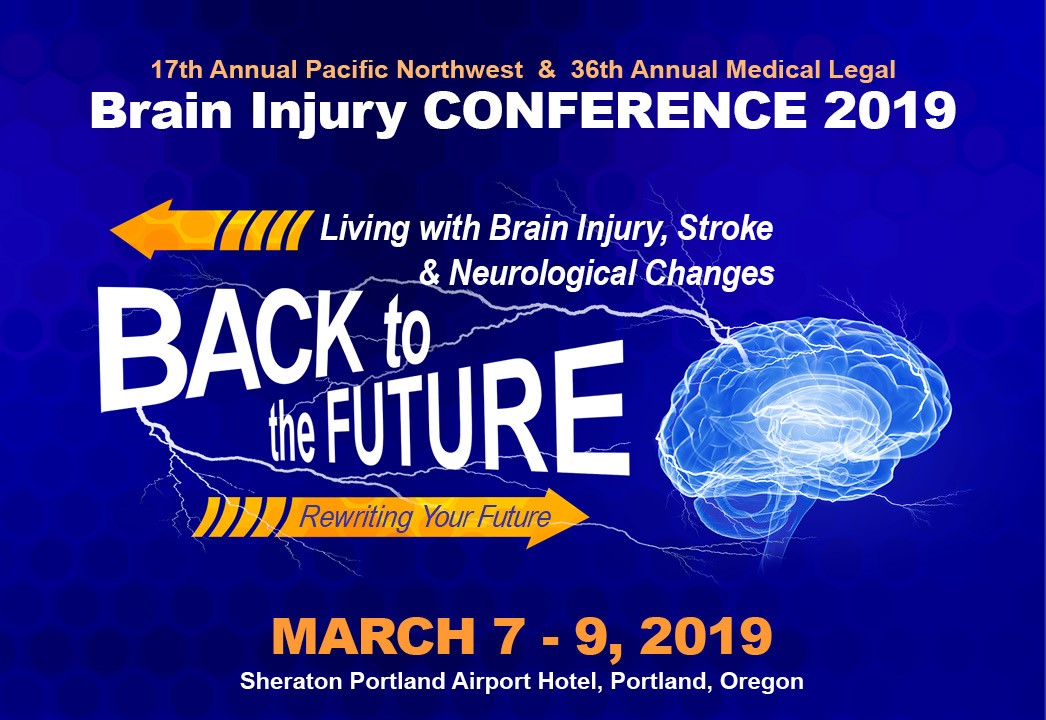
In 2003, we began the Pacific Northwest Brain
Injury conference.
BIAOR expanded our annual one day conference
over two days and included neighboring states:
Washington, California, Nevada, Idaho,
Alaska.
This was done in response to declining
resources and funding in those states to support
annual conferences.
BIAOR also began holding a separate track for
Native American's, a culture who have the highest
rate of brain injury of any cultural group in the
U.S.
In 2005 this group created the Native
American Brain Injury Advisory Council, a national
speaker's organization to present at Native American
gatherings nationwide.
Conclusion
There is no quantitative way to
measure the immediate effect of most of BIAOR’s many
programs.
We can, of course, count the number of
children reached with specific materials such as
helmets or the number of visitors to our web site.
Only time will determine if our information
and resources are of value to the public with:
-
fewer incidences of
brain injuries reported per year;
-
quicker access to
critical information to survivors and their families
through online and support groups;
-
new laws enacted and
enforced to guarantee that the rights and liberties
and access to publicly funded support services are
accorded those who have disabilities as a result of
a brain injury; and
-
a new level of
acceptance and tolerance for those individuals in
our daily lives who have brain injuries and other
disabilities.
There are no specific
“requirements” for those who receive information and
assistance from BIAOR.
We do hope, however, that all information is
reviewed carefully and adopted into daily life to
prevent brain injury.
We also hope that assistance given to
individuals and their families after a brain injury
provides the opportunity to receive the best
possible treatment available and assist with quality
of life issues.
Everyone is encouraged to
attend the various conferences and educational
seminars hosted by BIAOR to keep current with new
trends in the area of brain injury prevention and
rehabilitation.
Individuals are encouraged to attend and
participate in local support groups to learn new
techniques for themselves and share their own
experiences with others whose injury may be more
recent..The potential value of the programs and activities
of the Brain Injury Association of Oregon to all
Oregonians is very high.
Expanding these efforts and strengthened
professionalism only can heighten our effectiveness.
While the statistics are
staggering, the public remains largely unaware of
brain injury, its consequences, ways it can be
prevented and means of accessing available resources
and information. Brain injury is acknowledged as the
most unserved, underserved, underfunded and
misunderstood, by far, of all major disabilities.
|
|
Make A Donation that will help thousands of individuals with Brain
Injury.
Make a donation now !
Vehicle Donation
A free, convenient service for converting that extra car, truck, or RV into a tax
deductible donation benefiting Brain Injury Association of Oregon. You can
donate online or call
877-999-8322 to make your donation.
Fred Meyer Community Rewards
Link your Rewards Card to
Brain Injury Association of Oregon at
www.fredmeyer.com/communityrewards
Whenever you use your Rewards card when shopping at Freddy's, you’ll be helping
BIAOR to earn a donation from Fred Meyer.
Brain Injury Association Of Oregon Inc |
|

|
|